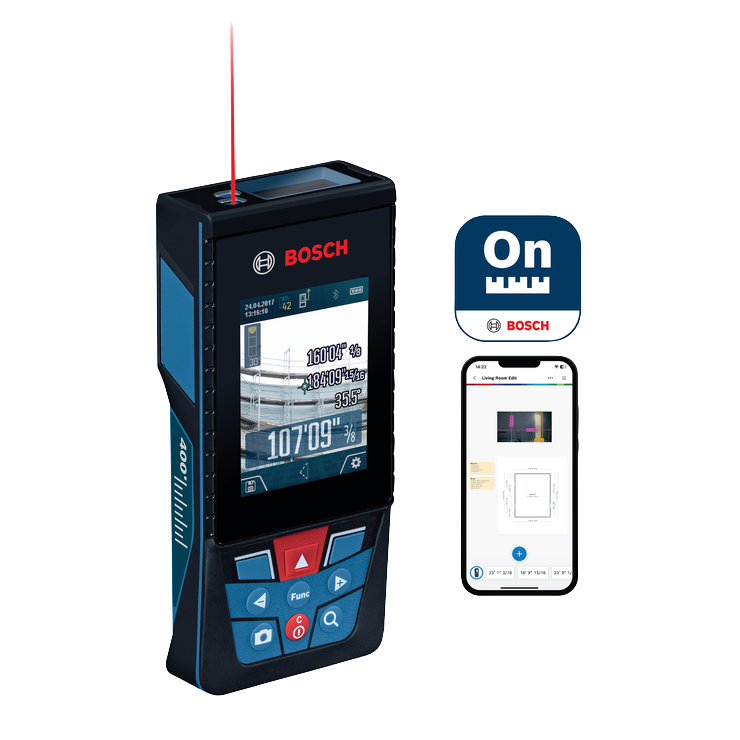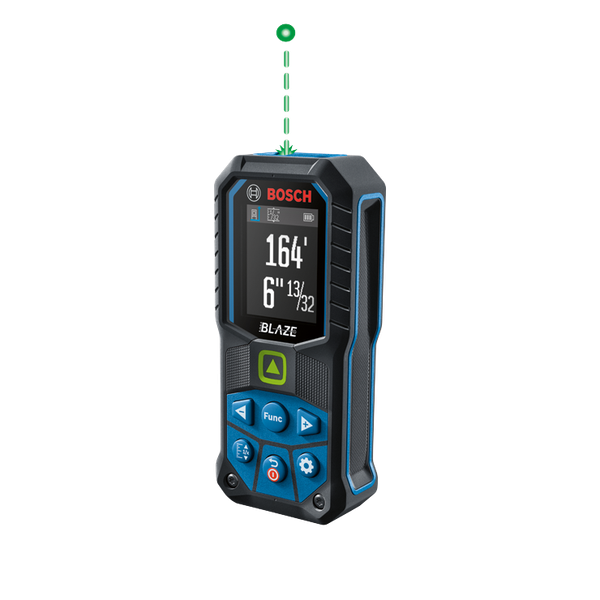
Bosch GLM165-25G Blaze Green-Beam Laser Measure
The green beam you can actually see on a bright job site.
- Range165ft
- Accuracy±1/16in
- LaserGreen4× red
Specs & review
View on Amazon
Check current price on Amazon
Independent reviews of laser distance meters, levels and stud finders. We put the numbers that decide a purchase up front, so you can pick the right tool in minutes.
The standouts across range, accuracy and value.
The green beam you can actually see on a bright job site.
Check current price on Amazon
Pinpoint indoor accuracy in a pocket-sized body.
Check current price on Amazon
Rechargeable, drop-tested and built for the job site.
Check current price on Amazon
One row per tool: what it is, what it measures, and the Amazon link.
The green beam you can actually see on a bright job site.
Check current price on Amazon
Pinpoint indoor accuracy in a pocket-sized body.
Check current price on Amazon
Long-range measuring with a camera to find the dot.
Check current price on Amazon
Rechargeable, drop-tested and built for the job site.
Check current price on Amazon
Budget meter with bubble levels and self-calibration.
Check current price on Amazon
The things people ask before buying their first meter, level or stud finder.
Both, for different jobs. A tape is better for short, solid spans you can reach, like a 2x4 or a door frame. A laser measure wins for rooms, ceilings, long walls and anything you would otherwise measure alone, because it needs no second pair of hands and does not sag over distance.
Most quality meters are rated +/-1/16 in (about 1.5 mm), with budget models around +/-2 mm. That is enough for framing, flooring and estimating. Accuracy is best up to about 30 ft and slowly degrades with distance, so use a solid target for critical cuts.
Typical handheld models reach 100-200 ft (30-60 m), and long-range models like the Bosch GLM400CL reach 400 ft. Rated range assumes a good target indoors. In direct sunlight the visible dot fades long before that, so outdoor use is about seeing the spot, not the sensor limit.
Green is easier for the human eye to see, especially across a large room or in daylight, and it usually costs more and drains batteries faster. Red is fine for indoor work at short to medium distance. If you measure outdoors or in bright interiors, green is worth the premium.
Yes, within limits. Sunlight washes out the dot, so on a bright day you may only see it at 10-30 ft even on a 165 ft tool. Green beams help, a camera-viewfinder model helps more, and a white target plate or a shaded surface extends usable distance a lot.
Line lasers are hard to see outdoors in direct sun. Green-beam levels with a pulse mode plus an outdoor receiver are the practical setup, and some work best in shade or on overcast days. Indoors, a green cross-line level is visible across a whole room.
Most electronic stud finders reach about 1.5 in (38 mm) through drywall in standard mode, with deep-scan modes reaching roughly 3 in for thick walls or lath and plaster. Metal detection usually goes deeper still. Depth ratings assume drywall; tile, plaster and concrete change the result.
Handheld measuring tools are Class 2 lasers, considered safe in normal use because the blink reflex limits exposure. Do not stare into the beam, do not point it at anyone's eyes, and do not look at it through binoculars or a magnifier. Treat it like any bright light.
Browse every tool we’ve measured, side by side, with the specs that actually decide a purchase.